
AI’s Profitability Questioned – How It will Affect Tech Stocks 

Economics, in simple terms, is an aggregation of demand and supply. In a free market economy, if there is enough demand for a product, there will be companies that supply it. If the demand is high enough that signals a potential for high profitability, companies will be competing intensely to gain a share of the market, including making significant amount of investments in research and development and infrastructure however profligate it may appear to be.   

A Forbes’ article by Beth Kindig reports that all big-tech companies including Microsoft, Goole, Meta, and Amazon have been spending hundreds of billions of dollars in AI infrastructure due to high demand for this technology. They are not only meeting this demand, but also investing beyond it. Big-tech CEOs unanimously say that failing to do so comes with the risk of falling behind their competitors. Google CEO Sundar Pichai is quoted as saying: “The risk of under-investing is dramatically greater than the risk of over-investing for us here, even in scenarios where if it turns out that we are over investing.” While these CEOs seem optimistic about AI’s profitability, from another perspective, they have no choice but to continue to allocate their capital towards AI. 

Continue reading “AI’s Profitability Questioned – How It will Affect Tech Stocks “
Cycles of Democratic-Republican Presidencies and Economic Performance – Why do Democrats Perform Better?

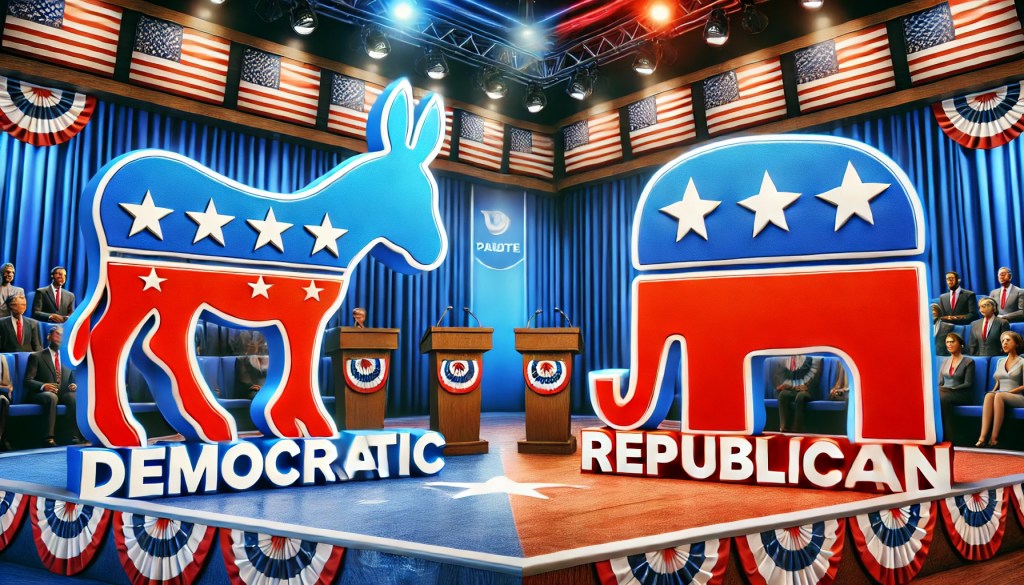
Presidents often like to take credit for stock market performance. During his term, President Trump, a Republican, frequently highlighted the rise in stock prices. The Trump administration achieved notable economic success, boasting annualized returns of 13.7%, placing him among the top performers compared to past presidents. However, one may be surprised to find that it is an anomaly for a Republican president to achieve high economic success, since Democratic presidencies have historically shown a pattern of significantly higher performance compared to Republican administrations.

This article discusses a 2020 research on stock returns and presidency conducted by the University of Chicago professors Lubos Pastor and Pietro Veronesi. It delves into the reasons behind the economy’s stronger performance under Democratic leadership, and discusses the research’s implications concerning the 2024 presidential election and beyond.

Continue reading “Cycles of Democratic-Republican Presidencies and Economic Performance – Why do Democrats Perform Better?”

Three Misconceptions of US Stocks – How Investors Can Navigate the Current Economy

We often hear the term, “diversification”, concerning investments. This strategy often involves spreading risks in various asset categories, not only in US stocks, but also international stocks, bonds, real estate, commodities and others. However, many people exclusively consider the S&P 500, a major US stock index, when thinking about investments, despite the availability of other options.

One reason for this focus on the main US stock exchange, may be its frequent media coverage, since it represents the largest firms in the country, and has historically delivered high returns. While people commonly assume US stocks always yield the best returns, this has not always been the case. This article will address three misconceptions about stocks and how individuals can navigate today’s economic conditions.

Continue reading “Three Misconceptions of US Stocks – How Investors Can Navigate the Current Economy”

Intervening with the Free Market – How California’s Minimum Wage Hike Distorts the Economy

Economists are often concerned with finding an optimal resource allocation where no one can be made better off or worse off, called Pareto-efficiency. Despite the ever-increasing government interventions in the economy since the Great Depression, the forces of the free market have largely determined this allocation in the US, including the prices and quantities of goods and services transacted. 

However, allowing the free market to determine economic outcomes inevitably creates winners and losers, and critics have been proposing alternatives to this system. In the field of welfare economics, scholars like John Rawls argues for increasing the welfare of the disadvantaged. Rawls believes that increasing the welfare of the well-off individuals does not increase that of the worse-off individuals, thus society should be concerned only with helping the underprivileged. While it sounds righteous in theory, how feasible is it in practice?

Continue reading “Intervening with the Free Market – How California’s Minimum Wage Hike Distorts the Economy”